featured works
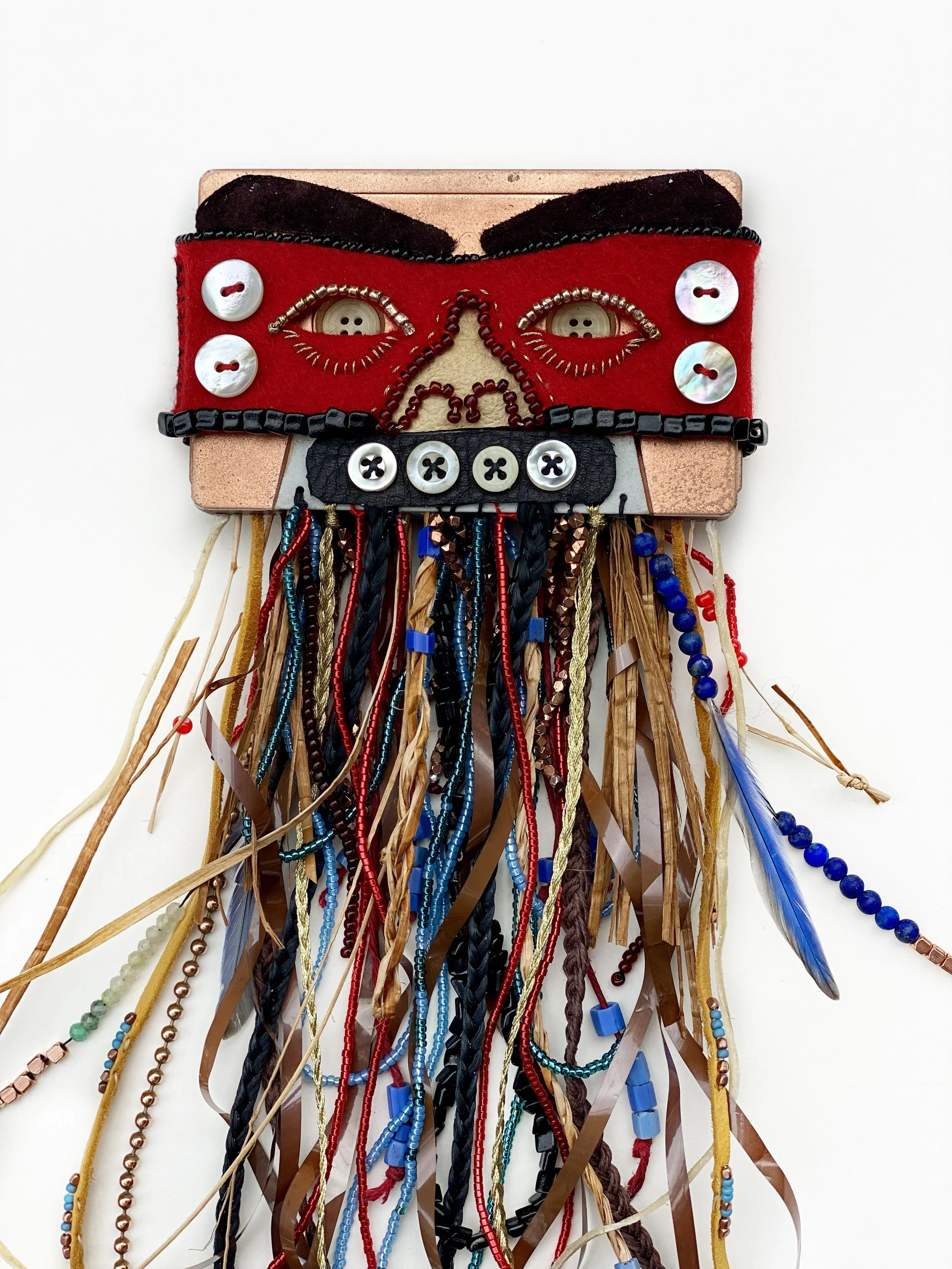
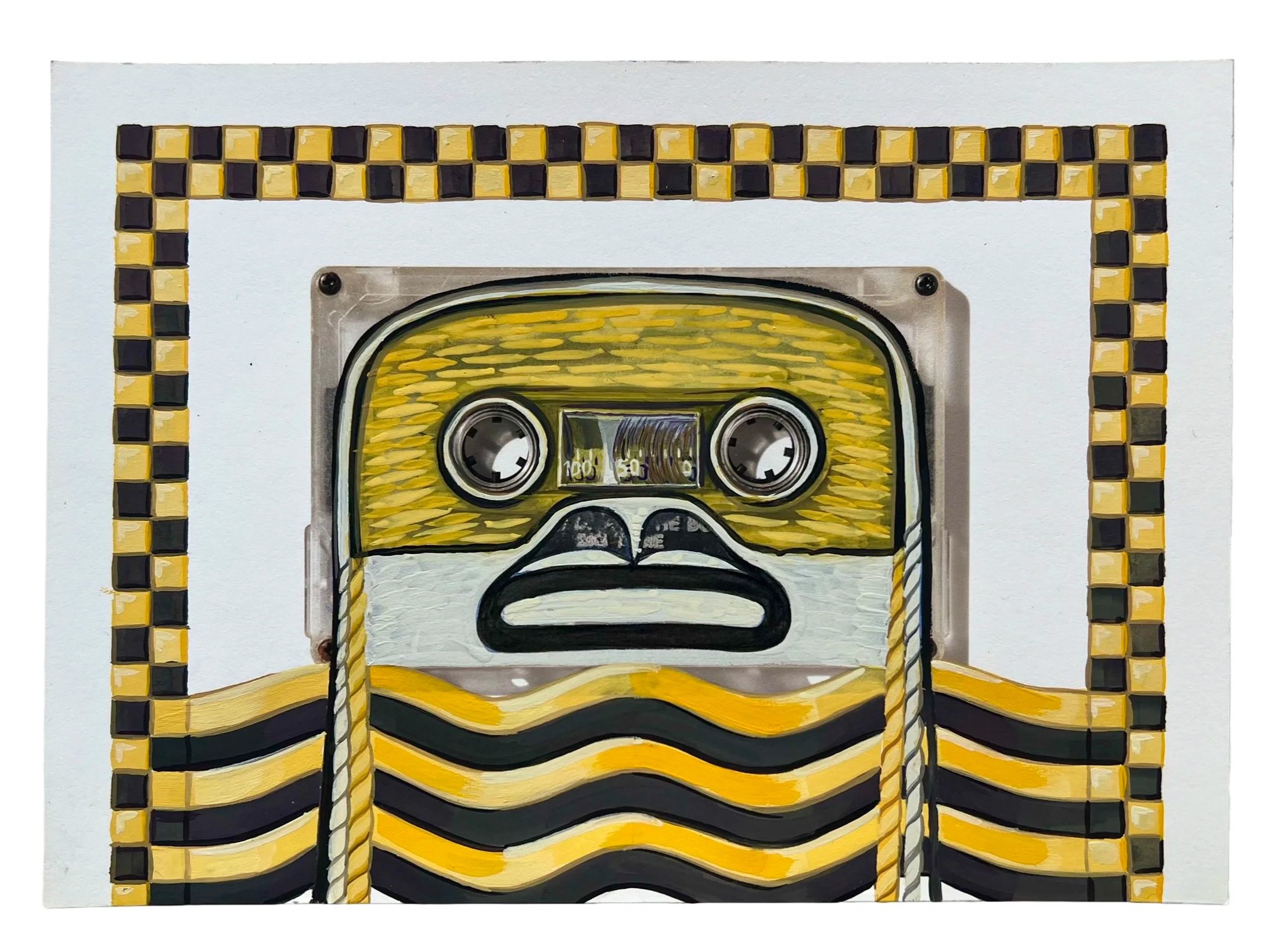
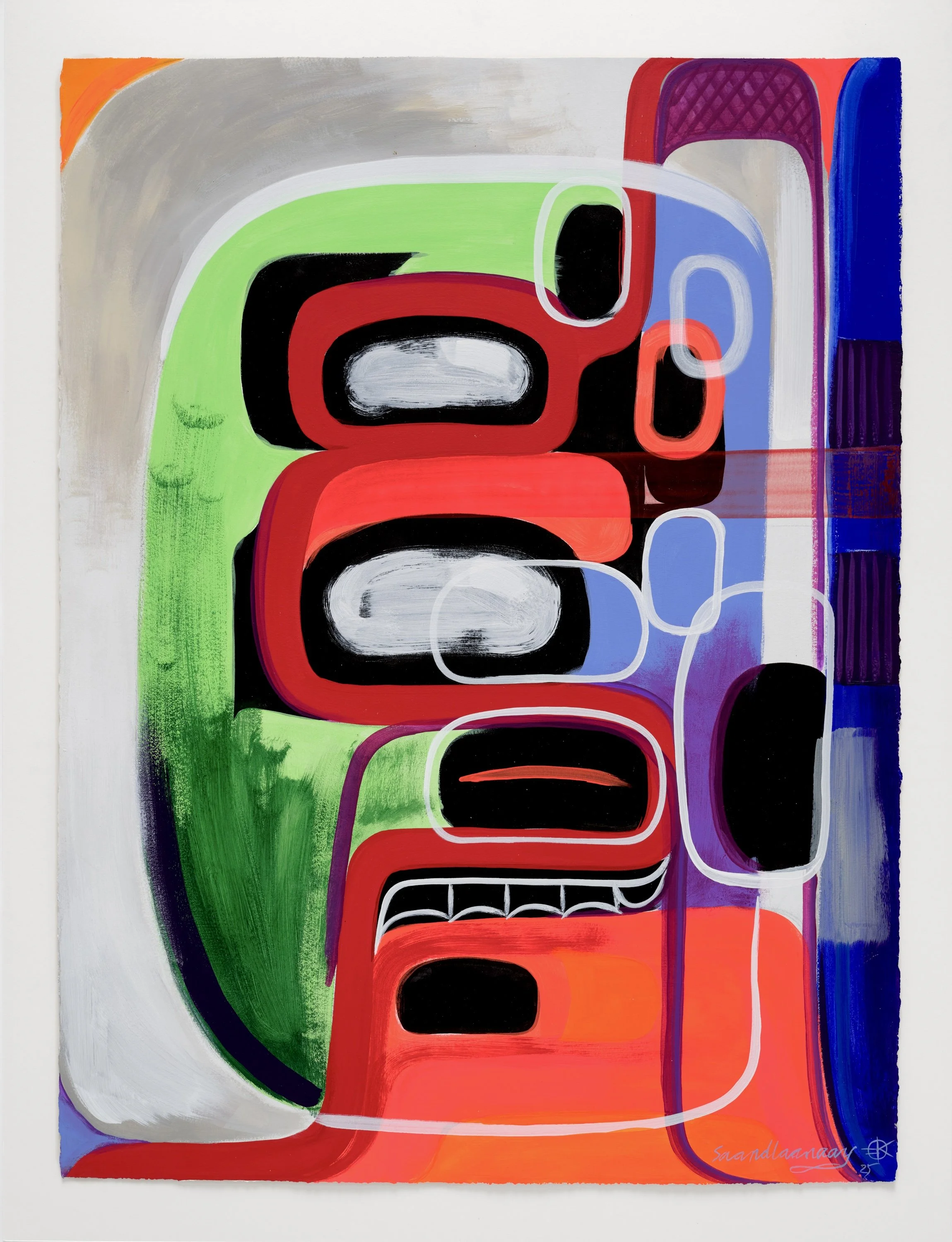
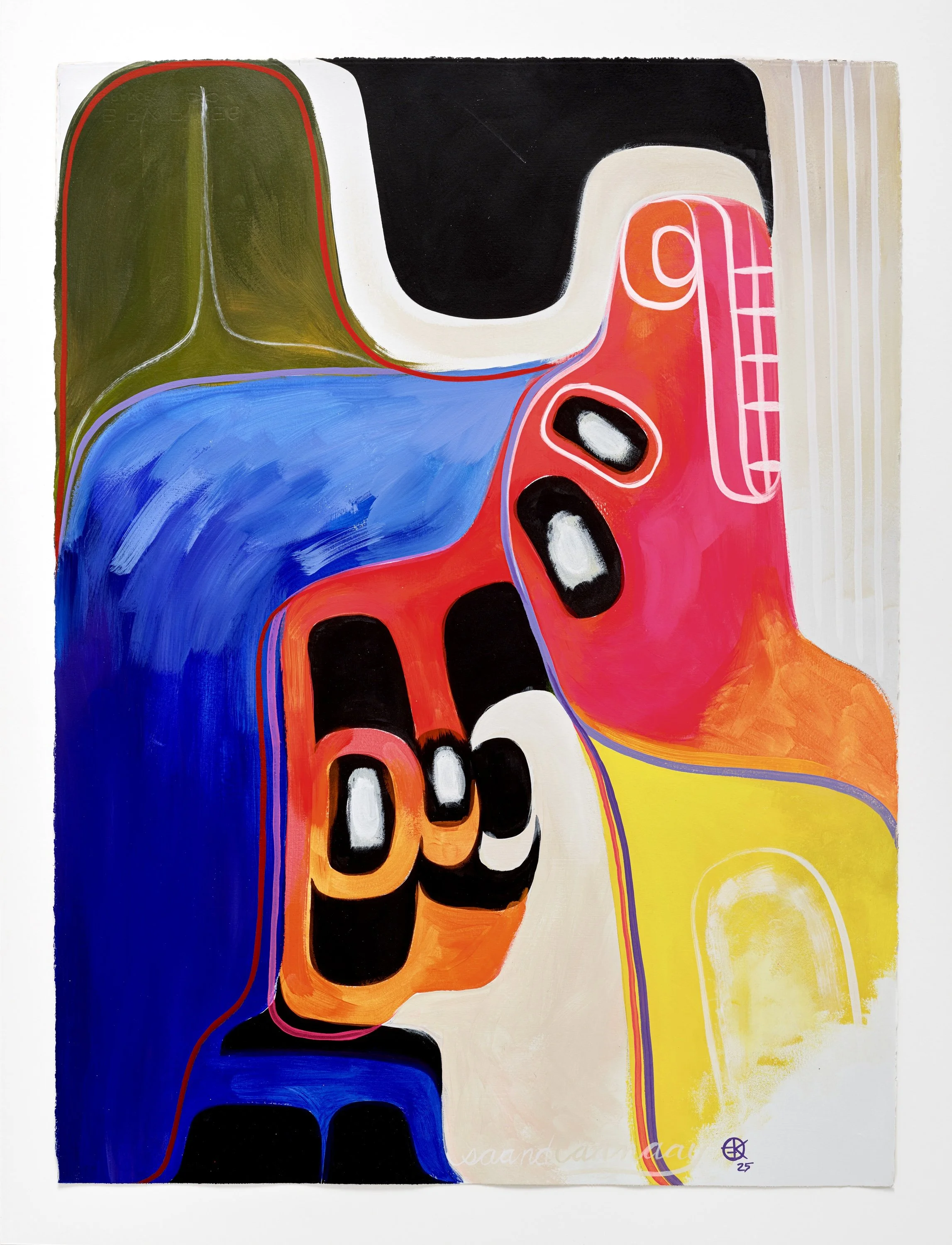
ḵaahláang an unsád, iitl' tláawhla ḵuyaadang (to know what is inside, to love what we are made of), 2024
cassette tape, deer leather, felt, antique buttons, abalone buttons, glass beads, copper beads, red cedar bark, yellow cedar bark, white water turquoise, lapis lazuli beads, jade beads, sinew, sterling silver beads, gold filled beads, bone beads, bone buttons, thread, red cedar shavings from two totem poles, copper buttons, blue bird feathers, trade beads, and the cord I wore my copper on for 4 years.
4”x 24”
Titled in the Haida language, Xáad kil, ḵaahláang an unsád, iitl' tláawhla ḵuyaadang (to know what is inside, to love what we are made of), is about being moved by what cannot be known and must be felt.
ḵaahláang an unsád, iitl' tláawhla ḵuyaadang is a cassette tape rendered unplayable by artistic intervention. What the tape now holds is a recording of care and meaning through adornment that denies the object’s original function, calling into question signifiers of its purpose. It gives an artifact from time past a new life without completely erasing its nature or relying on technology that is no longer relevant.
It is a palimpsest— the old information is scraped away and written over, except the method of writing is different— forcing a viewer to conceive of a recognizable object differently. It is no longer a recorded device to be put inside and played by a machine. It is a living spirit charged with ancestral energy, for consideration of the human eye and heart.
Recordings are considered credible documentation of events. Whether a recording holds a song, a conversation, field recordings, ambient sounds of doings— that event is provable as being real because it exists in recorded history.
The Haida word for lover, ḵ’a táayaa is the single word that replaces all song titles on the paper label affixed to the tape (side b). Each element attached to this lover is infused with meaning, extrapolating the love shared from its maker to its recipient in a legend written only for their own knowledge.
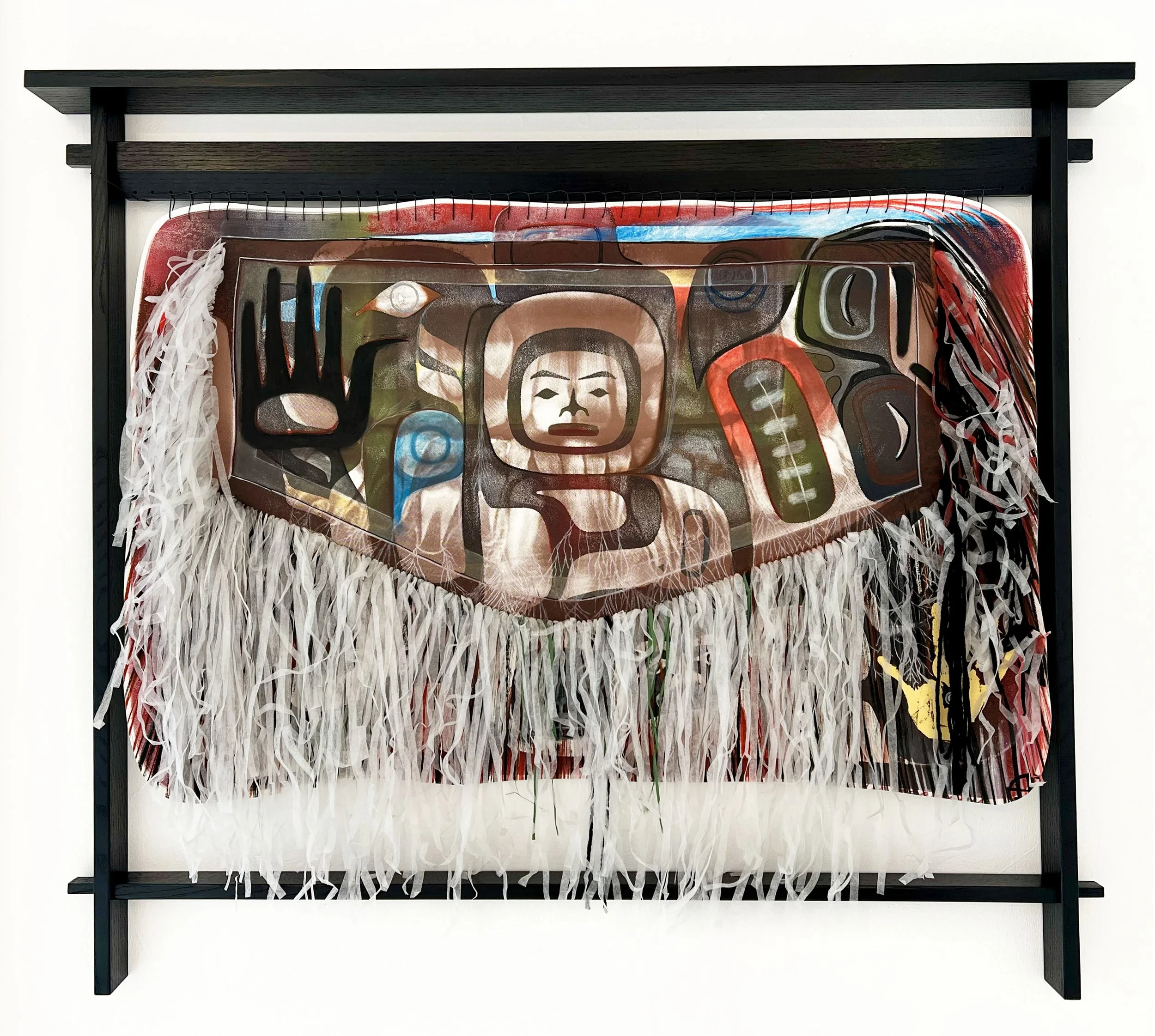
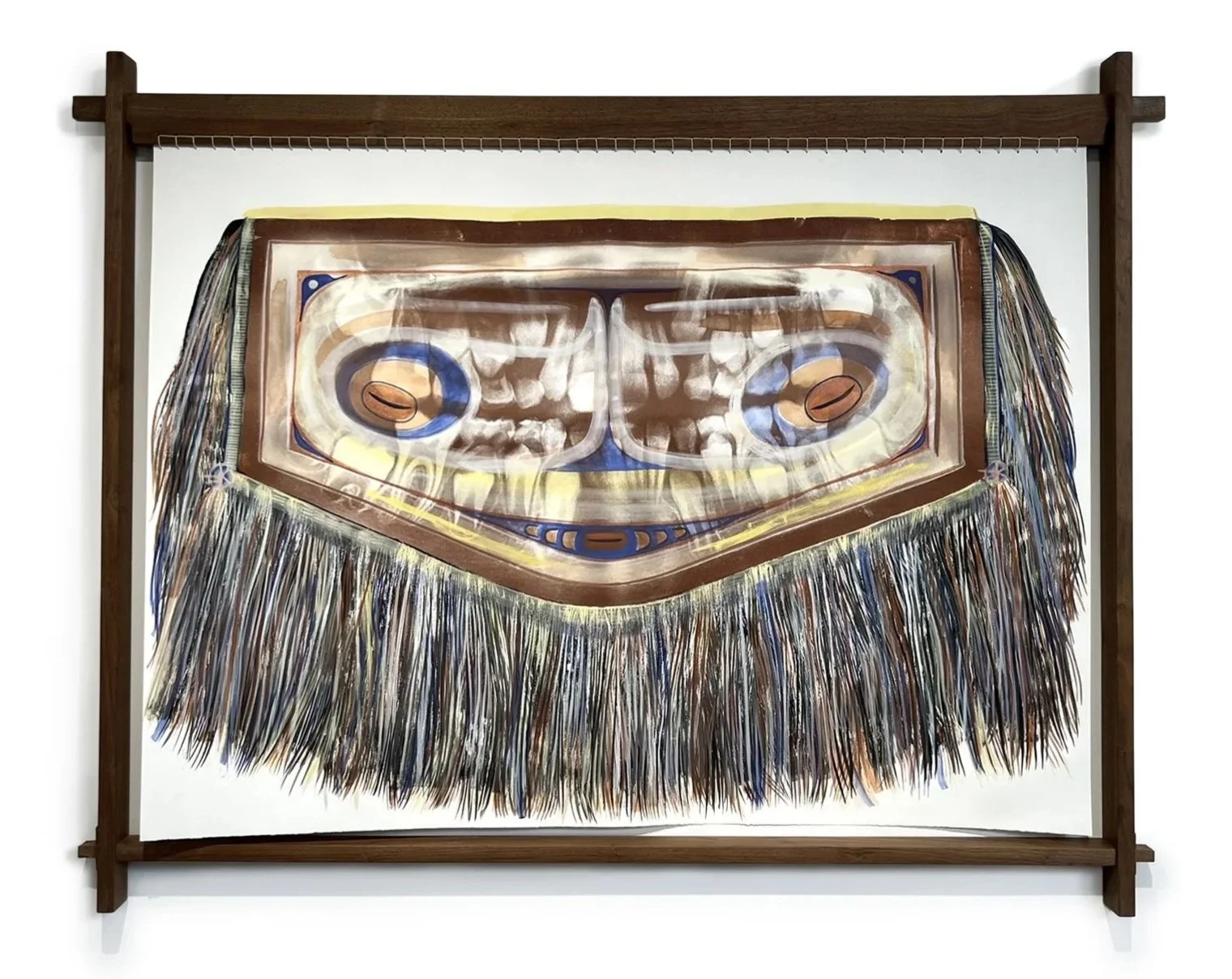
She Woke From a Dream to the Voices of Trees, 2025
serigraph, monoprint, conte crayon, charcoal, mulberry paper, gold leaf, and merino wool on paper with cotton cord & ebonized white oak loom
54 x 40 inches
In She Woke From a Dream to the Voices of Trees, a figure from Haida oral histories appears. The One Who is Firmly Rooted, or Half-Rock Woman is a being fixed within the clan house who offers guidance, nourishment, and quiet order. In the story, she is both immovable and enduring, sharing grounded wisdom and sustaining her kin through the constancy of her presence. Here, she re-emerges as a spirit of protection, standing before the image of a child’s mouth—an x-ray that becomes a portal between generations. From the roots of those teeth, mycelium grows, extending into a delicate fringe that completes the form of a Naaxein dancing blanket.
This network of paper threads recalls the ways memory, like mycelium, travels invisibly beneath the surface—binding generations and transmitting knowledge across time. The form suggests both regalia and loom, vessel and root system, grounding the work within the ongoing transmission of language and story.
Within the context of Generative Love, this work embodies regeneration through relation. It visualizes how ancestral presence persists within acts of care, craft, and remembrance—how paper, plant fiber, and pigment become conduits for spirit. Through the intertwined figures of the sleeping wild woman and the steadfast ancestor, the work enacts a cycle of dreaming and awakening: an invocation of how love—like language and land—renews itself through acts of listening and responding.
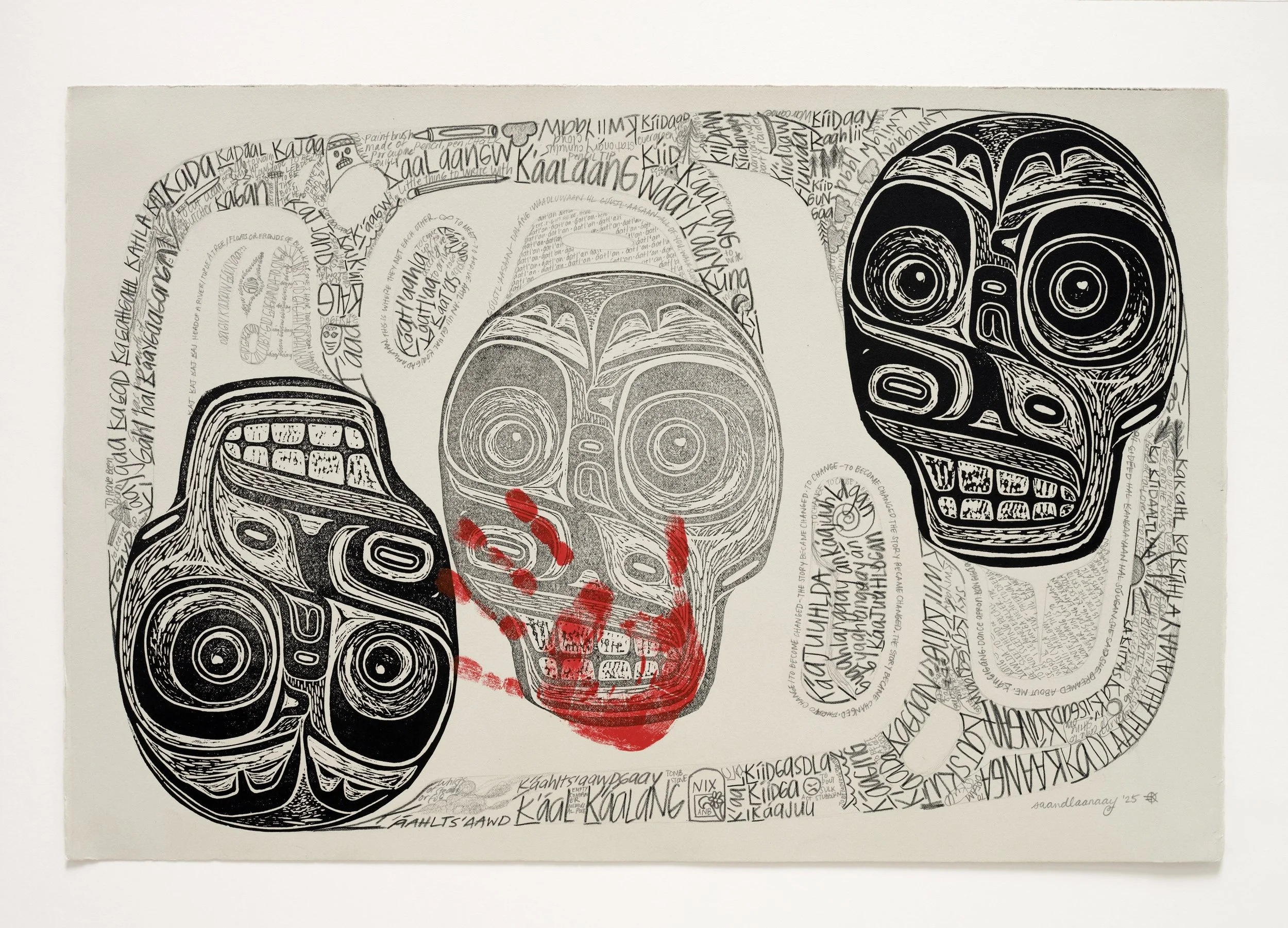
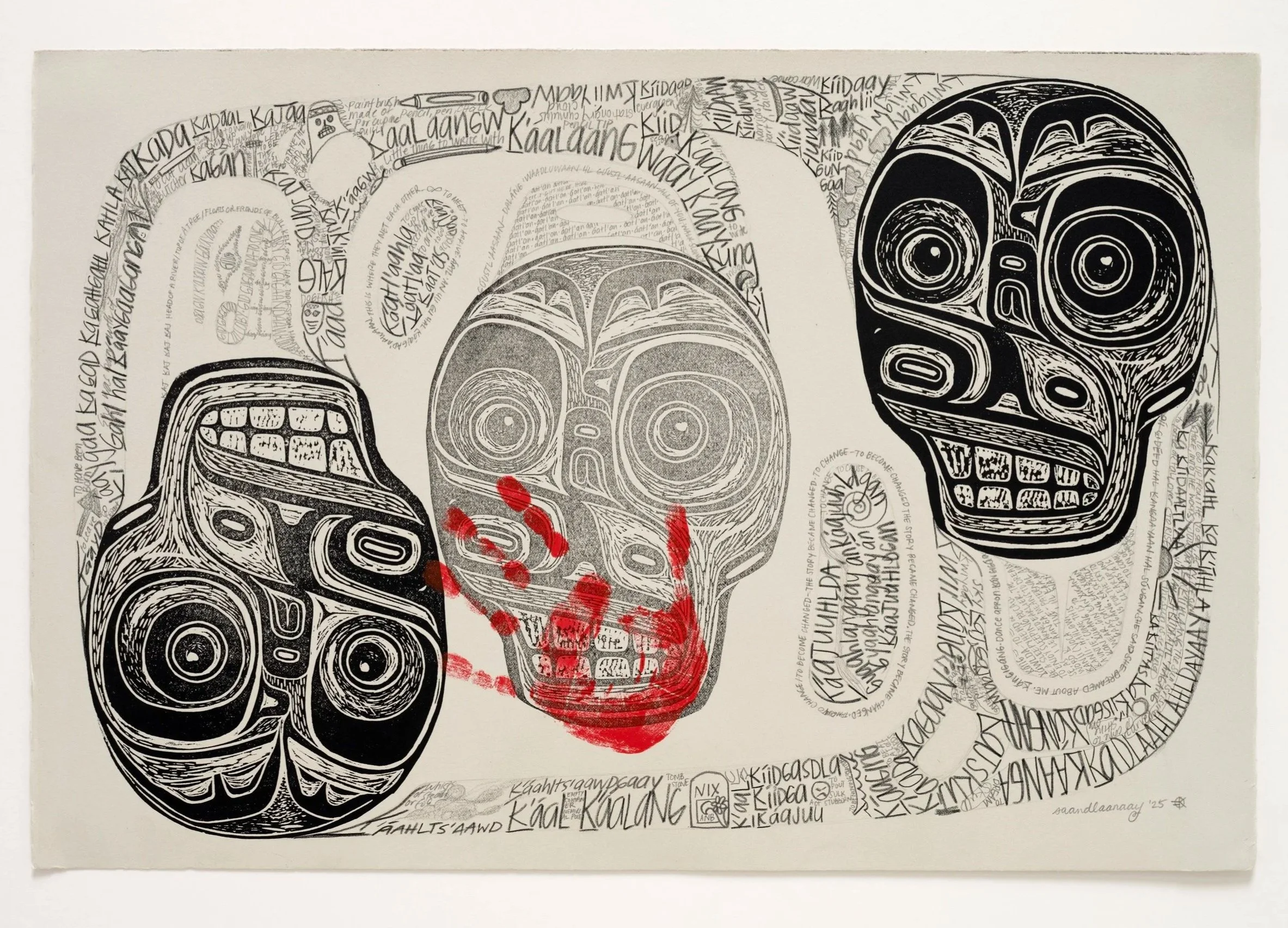
(káada/at a loss for words) gyaahlangaay án kaajuuhldgan/the story became changed, 2023-25
block print, pencil, colored pencil, & acrylic on paper
15 x 22 inches
In Xaad Kíl, the Haida language, the underlined k is a uvular consonant—formed by stopping air at the back of the throat without vibrating the vocal cords. It is an ejective, popping, voiceless sound—one that does not exist in the language of the colonizer.
The kajskuj, or skull, is held in a formline dream of words in Xaad Kíl, many beginning with the underlined k. The verb káajuuhlda means “to become changed.” Cultural continuance transforms the story written in nation-building archival records that seek to define how Native people exist today. our language learners and culture bearers—those who breathe life into our language, rekindling its connection to Land and ensuring its song endures for generations to come.
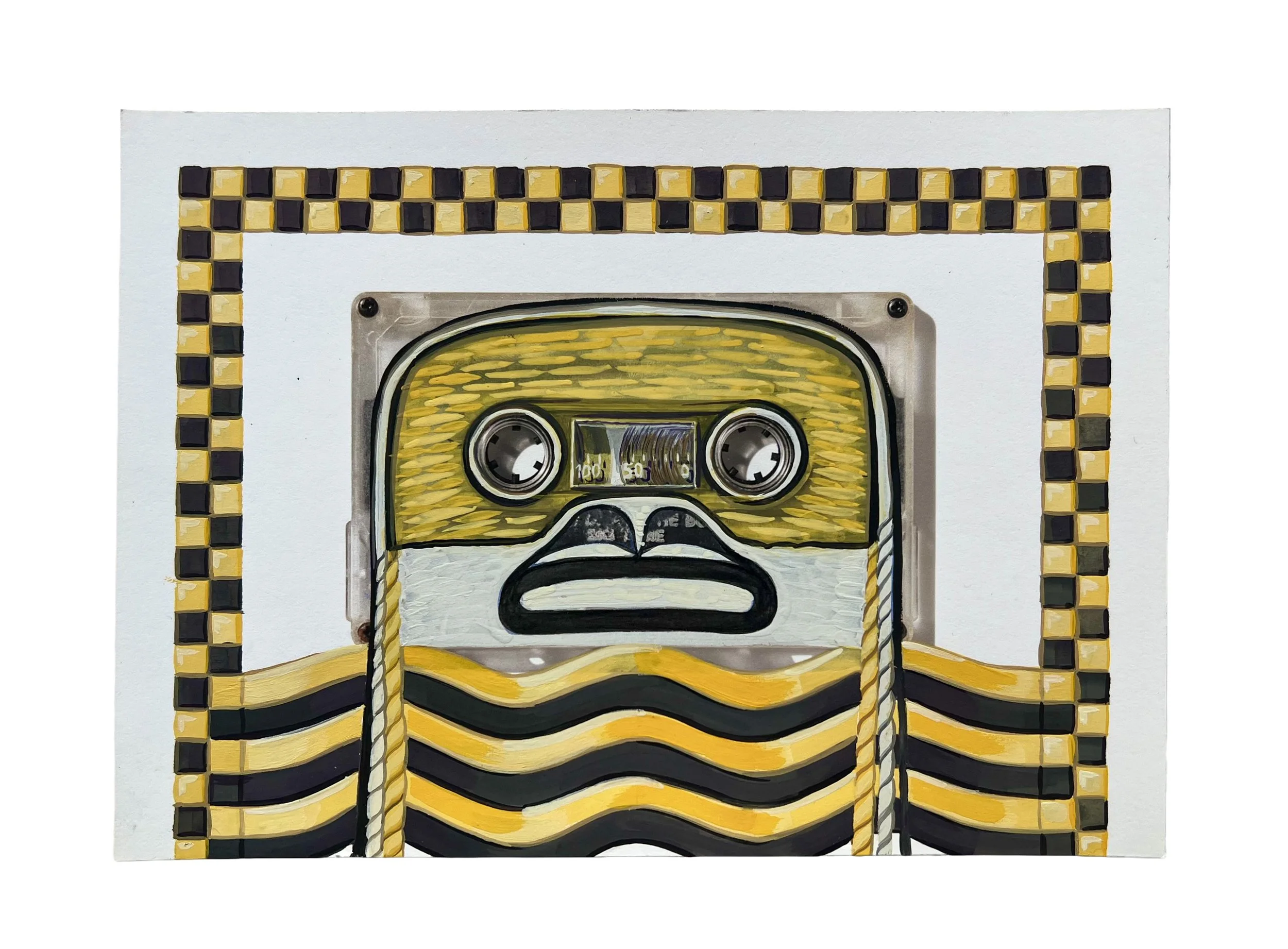
Insecure Mix. Díi aa Sg̱áan Tlagáa X̱aat'áay gúusuugang (ghost of a ghost of a real Myth)
Painted (gouache) giclée print on Canson Photographique
5”x7”
Haida poets Ghandl (Walter McGregor in English) & Skaay (John Sky) told stories in the old way— at the turn of the 20th century, they were recorded by John Reed Swanton, an ethnographer, through Haida translator Henry Moody. In the 1980s and 90s, almost one hundred years later, a Canadian poet named Robert Bringhurst translated these epic poems to English. It is highly controversial work. This is a conversation about the tension between protection and perpetuation.
A Naaxiin ghost face adorns a cassette, a sonic record. She masks the record and brings it into her reality on paper. The title, in the Kaigani dialect of Haida, translates to, “The people of the afterworld are speaking to me.”
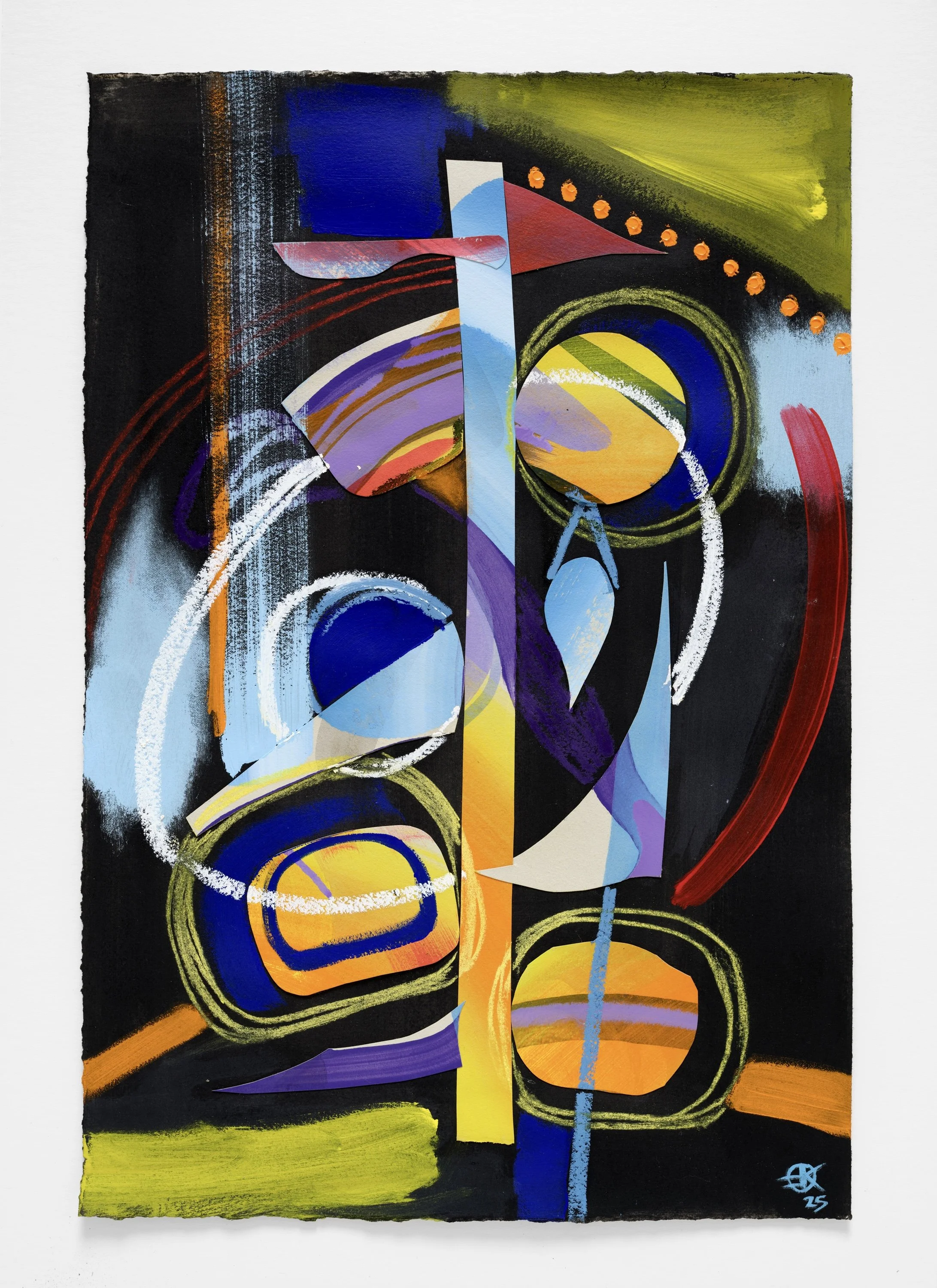
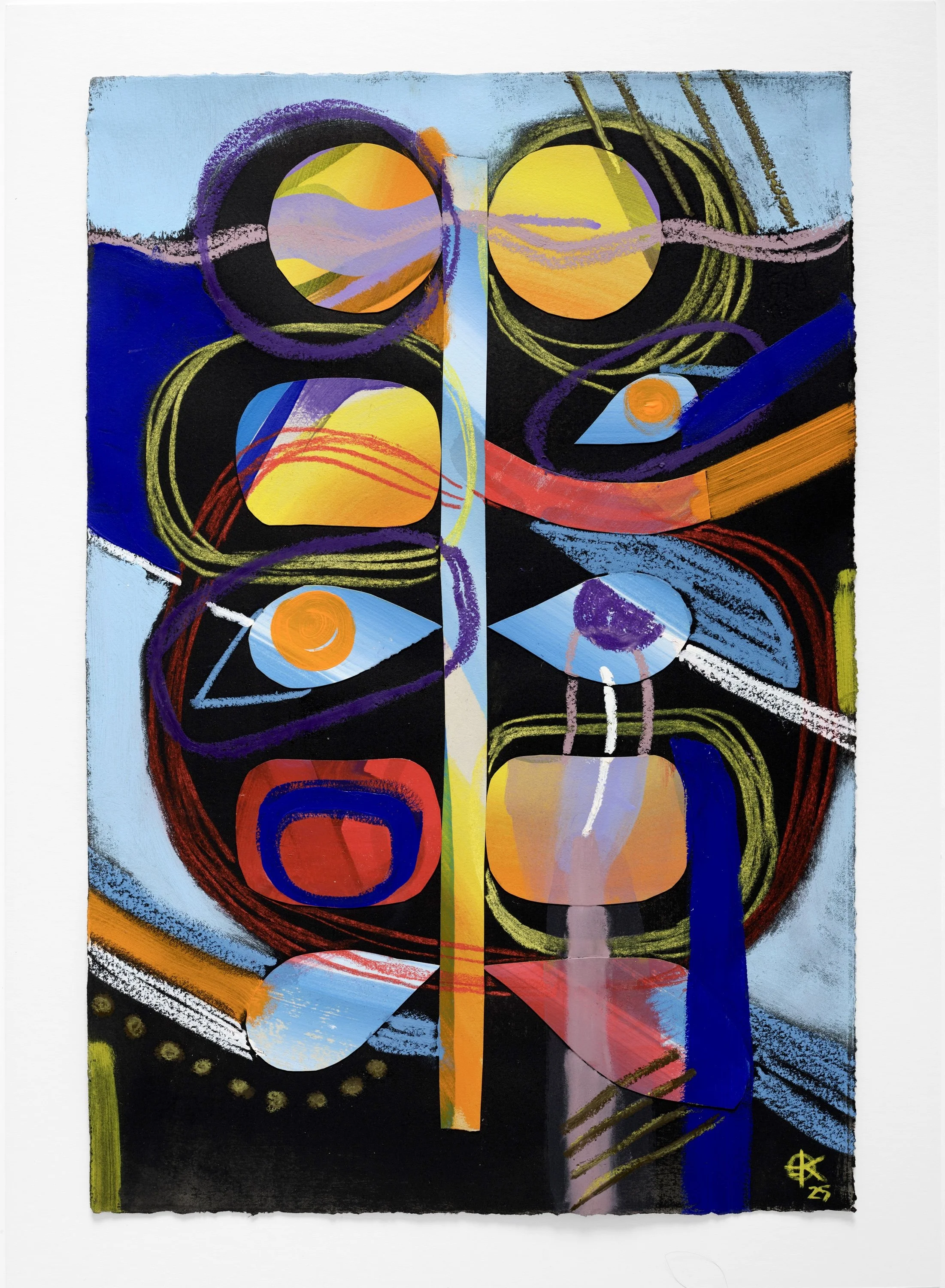
Time is Symmetrical, Balances on Now
series, 2025
the past stretches out before me, a clear and known landscape (seen), 2025
gesso, collage, acrylic, oil pastel, & conte crayon on paper
22 x 15 inches
i sense the future at my back, stirring with the shifting air (felt), 2025
gesso, collage, acrylic, oil pastel, & conte crayon on paper
22 x 15 inches
Baring the Spirit (Body and Breath), 2025
Serigraph, monoprint & gouache on paper, 36x50 inches
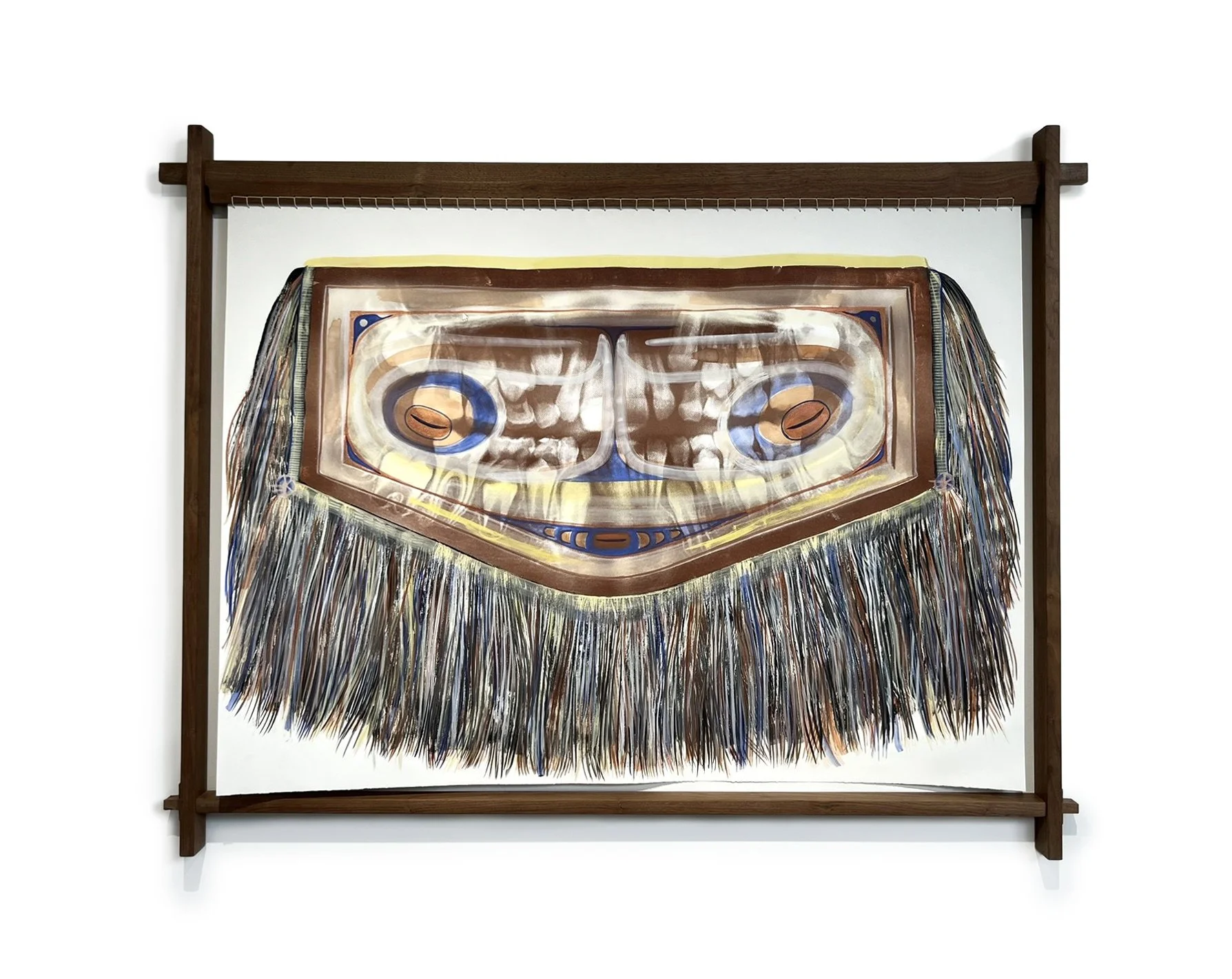
Cultural belongings are part of a larger, collective body that archives relationship between people and Land. The sky blanket, or, dancing robe is a woven record of status and commemoration. It communicates the power of the ancestors before us who came, through generations, to know the wisdom of íitl’ tlagáa, our land. This Haida sky blanket does not bear a woven pattern, instead an x-ray of a child’s mouth reveals the overlapping nature of time, suggesting that moving into the future, through growth and change, necessitates loss.
Teeth are necessary for clear speech; the mouth is the gateway of the human voice— an instrument through which histories are carried, identities are formed, and connections sustained. In voice, lies powers of expression at once defined by uniquely personal qualities and by cultural markers. Language, vocalics, song, and story are all forms of this identity that is specific and connected to Land— but like all that is living and imbued with spirit, subject to changei. An x-ray highlights the presence of unseen realities and the future that exists within every given moment. The form of the robe asserts the enduring connection of spirit to the material offerings of Land and of people to one another through shared iconography.
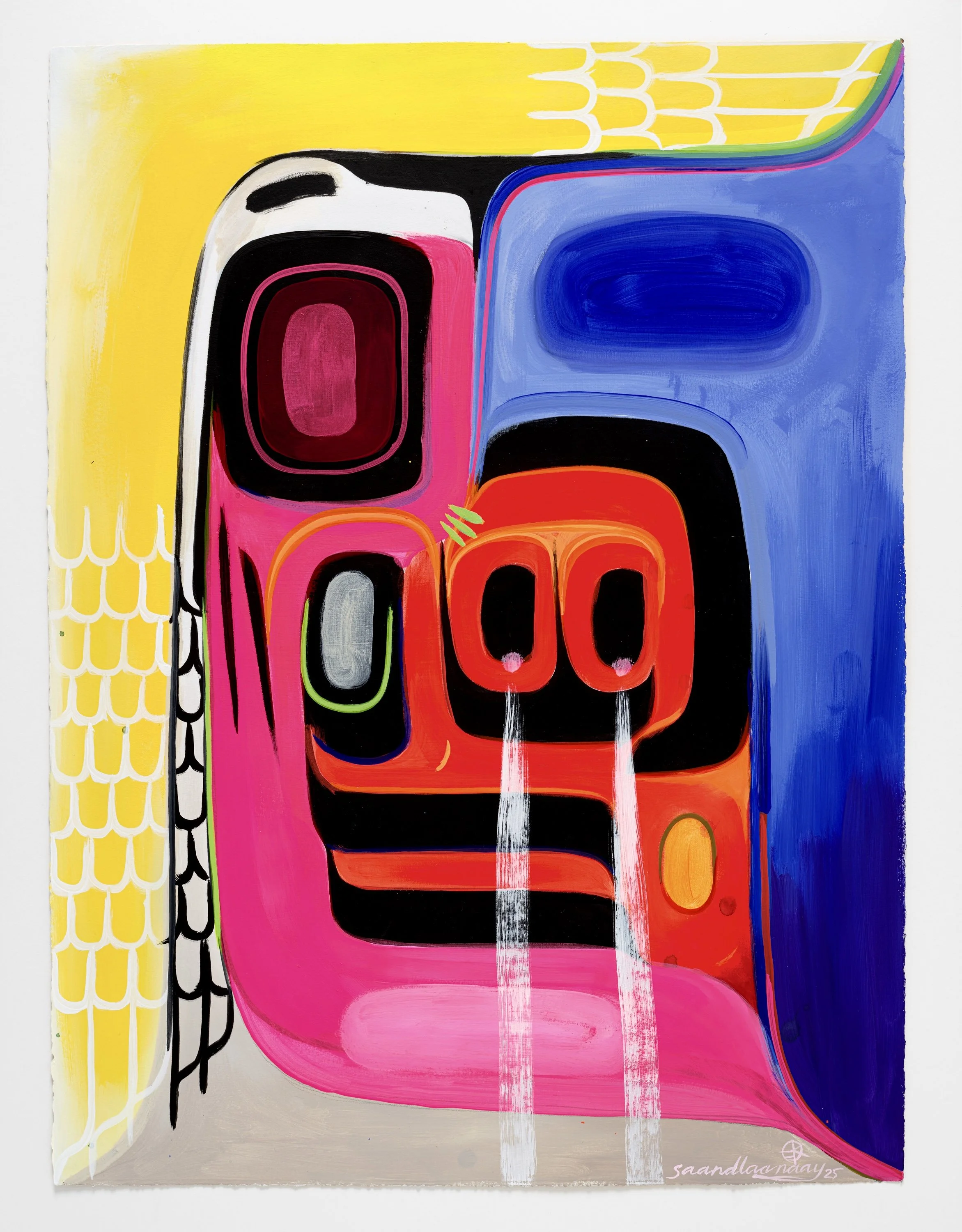
Holeh Land!
series, 2025
madonna with raven hat and child (goddess complex), 2025
acrylic on paper
30 x 22 inches
shifting moonlight, afterimage, & void, 2025
acrylic on paper
30 x 22 inches
prayers to the other side of the veil
(you dirty wasgo), 2025
acrylic on paper
30 x 22 inches
Permanent Residence: Sensational Heterotopia
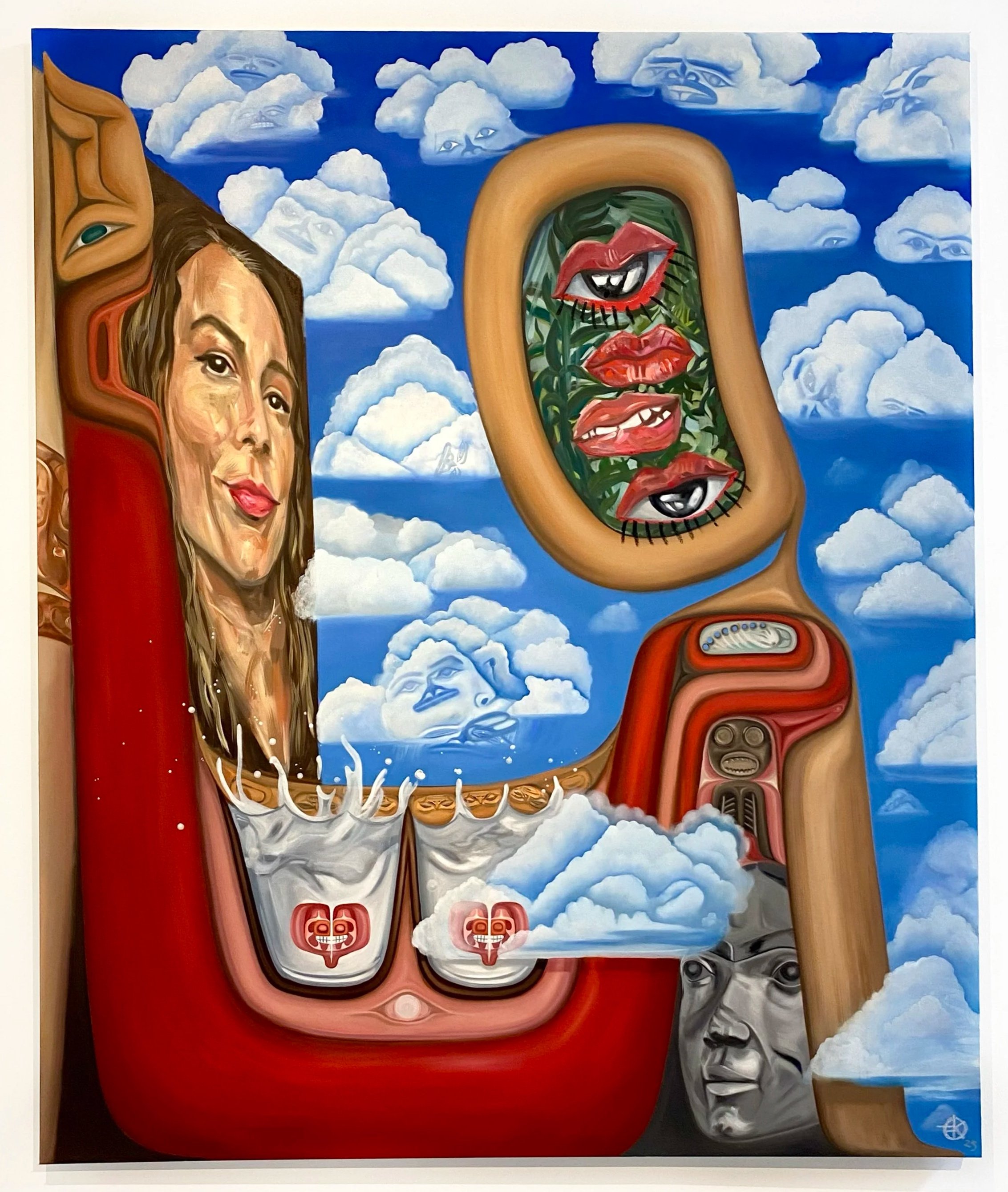
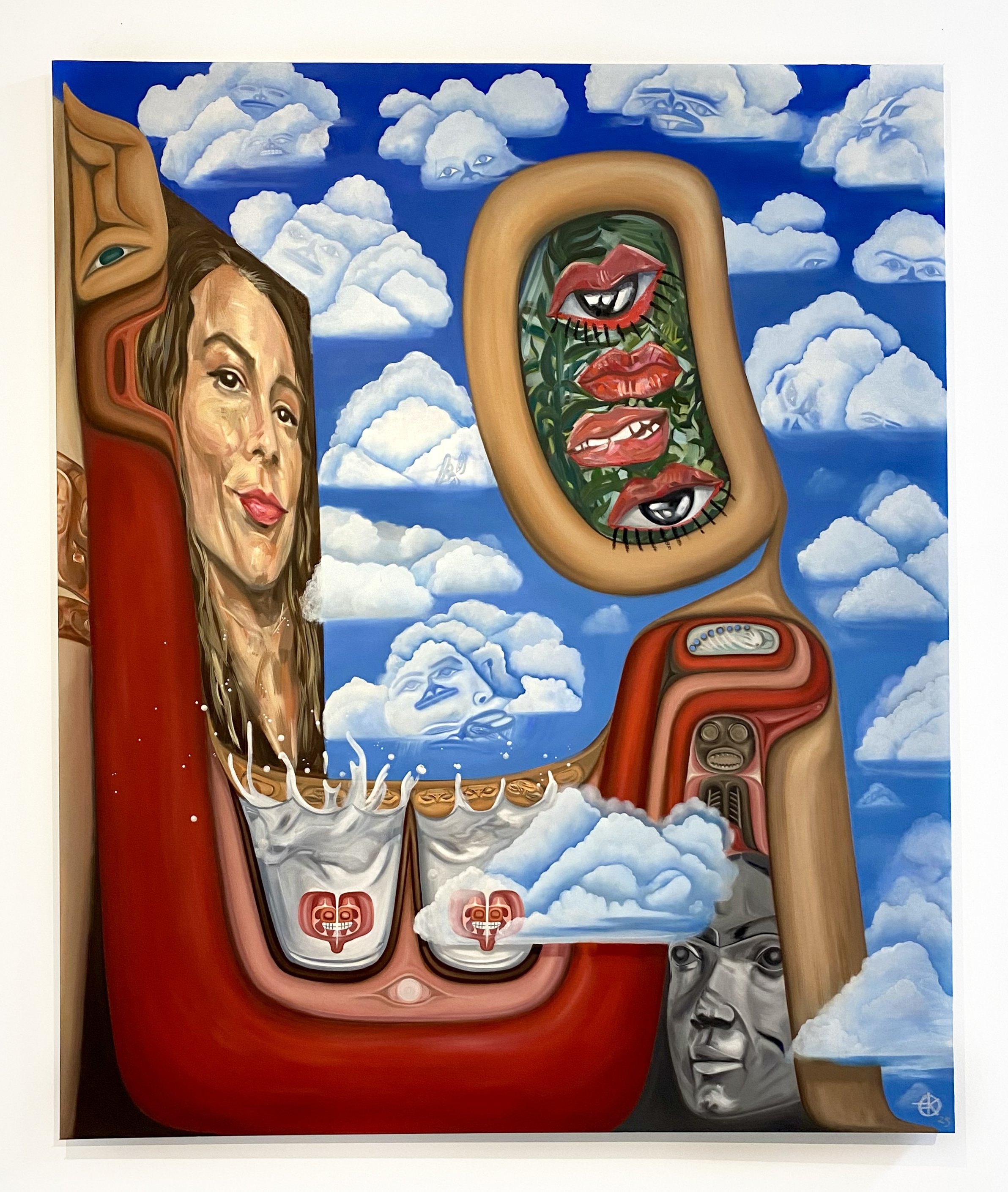
Living in Your Dreams, 2025
Oil on canvas
72 x 60 inches
Living in Your Dreams is the first in a series exploring Haida storytelling as an expression of worldview that follows the same principles that guide Northwest Coast formline. Here, The One Who Holds Up the Boundary Between Worlds confronts viewers, placing herself between viewers and a of the artist’s self-portrait— triangulating self, expression, and the audience.